Dear followers and readers,
The blogs and news about Abu Dhabi Astronomy was transferred to it's own website. Please follow us at abudhabiastronomy.com
Friday, January 8, 2016


Tuesday, October 6, 2015
OCTOBER 2015 TRIVIA
The longest night month of 2015 starts at the new moon of October 13, 00:06 hour UTC to the new moon of November 11, 2015 that last for 29 days 17 hours and 41 minutes. It is longer by 4 hours and 57 minutes than the mean lunar of 29 days 12 hours and 44 minutes.

Saturday, September 19, 2015
ASTRONOMY DAY CELEBRATION


The Picture speaks by itself.
The first celebration of Astronomy Day in Abu Dhabi or even the entire UAE was successful. The aim of the activity was make people more aware about astronomy. To my surprise as the organizer of this event, I didn't not expect that much people's respond to the advertisement of celebrating with the entire world the Astronomy Day.
We, from Abu Dhabi Astronomy wants to thank the management and staffs of The Mall at World Trade Center Abu Dhabi. They accommodate as and help us a lot with the event.
Children and adults enjoyed as they participate in dancing and astronomy trivia games. The excitement and enjoyment added when the winners received their prize. Thank you for the generosity of Night Sky LLC astronomy shop in helping as make the event possible.
"We are looking for a next event..." that's what most of the parents comment after the event. And we from Abu Dhabi Astronomy encouraged to work more to introduce astronomy in the land of Abu Dhabi.
Saturday, June 20, 2015
SUMMER SOLSTICE FALLS ON FATHER'S DAY

The Summer Solstice
The summer solstice heralds the beginning of summer in the Northern
Hemisphere. The timing of the summer solstice depends on when the Sun reaches
its northernmost point of the equator.
This 2015, the summer begins with the solstice on June 21 at 12:38 P.M.
EDT. and on this year, Father's Day is also celebrated!
Where the word solstice came from? It is from the Latin solstitium, from sol (sun) and
stitium (to stop), reflecting the fact that the Sun appears to stop at this
time (and again at the winter solstice).
In temperate regions, we notice that the Sun is higher in the sky
throughout the day, and its rays strike Earth at a more direct angle, causing
the efficient warming we call summer.
This summer solstice is the day where we have the most hours of sunlight during
the whole year.
At the winter solstice, just the opposite occurs: The Sun is at its
southernmost point and is low in the sky. Its rays hit the Northern Hemisphere
at an oblique angle, creating the feeble winter sunlight.
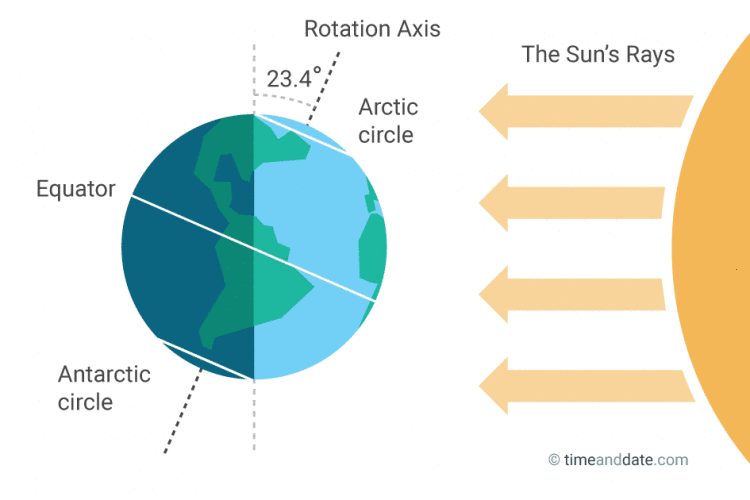
timeanddate.com
In Abu Dhabi June Solstice falls exactly on June 21st 2015, 20:39 GST with a total day length of 13 hours, 39 minutes and 11 seconds. On this day it is 3 hours, 2 minutes longer than on December Solstic.
The sun rises at 05:34 and sets on 19:14
Tuesday, June 9, 2015
STRANGE SOUNDS HEARD AROUND THE WORLD... WHAT IS THE MEANING?

The Map shows different places where people heard an strange sound from the sky.
One of the hottest topic over the internet/social media this past few months or even years is when someone posted video that contain a strange sound. Initially people didn't pay attention about it not until someone collected all these videos and put them together and posted over the internet and became viral. Some sounds are creepy in nature and some sounds like a trumpet.
Many speculations and interpretations was made to give answer to this mysterious sounds from the sky.
https://www.youtube.com/watch?v=2Q6sweWwFGg
https://www.youtube.com/watch?v=71rGrS6k-cI
https://www.youtube.com/watch?v=j9qipbtjQlg
https://www.youtube.com/watch?v=_iG-MofmHPw
Then I remember during the Abu Dhabi Science Festival 2014, I saved and recorded the sounds from the outer space recorded by NASA which is resembled to these sounds that are circulated over the internet. This different sounds was used as part of our exhibit during the festival.
https://www.youtube.com/watch?v=-MmWeZHsQzs
The sounds recorded from different planets.
You’ve probably heard that there’s no sound in space, but
technically that’s not true. Now yes, space is a virtual vacuum….. However,
sound does exist in the form of electromagnetic vibrations that pulsate in
similar wavelengths. What NASA did was design special instruments that could
record these electromagnetic vibrations, and transferred them into sounds that
our ears could hear.What you’ve heard is actual sound in space, nothing has
been added. It’s a beautiful, yet creepy.
https://www.youtube.com/watch?v=rfc8_1b890U
The upper link shows the sound of our very own sun.
Our Sun lies 93,000,000 miles away, surrounded by the vacuum of space. Sound won't travel through space, of course. But with the right instrument, scientists can "hear" pulsations from the Sun.
The entire Sun vibrates from a complex pattern of acoustical
waves, much like a bell. If your eyes were sharp enough, you could see a bell's
surface jiggle in complex patterns as the waves bounced around within it. Likewise, astronomers at Stanford University can record
acoustical pressure waves in the Sun by carefully tracking movements on the
Sun's surface. To do this, they use an instrument called a Michelson Doppler
Imager (MDI), mounted on the SOHO spacecraft, circling the Sun 1,000,000 miles
from Earth. The Sun's acoustical waves bounce from one side of the Sun to
the other in about two hours, causing the Sun's surface to oscillate, or wiggle
up and down. Because these sound waves travel underneath the Sun's surface,
they are influenced by conditions inside the Sun. So scientists can use the
oscillations to learn more about how the structure of the Sun's interior shapes
its surface. The Sun's sound waves are normally at frequencies too low
for the human ear to hear. To be able to hear them, the scientists sped up the
waves 42,000 times -- and compressed 40 days of vibrations into a few seconds.
What you'll be hearing are just a few dozen of the 10 million resonances
echoing inside the Sun.
Now we know, even in the stellar space there an actual sound but cannot be heard by human ear. The past years to the present more and more people heard same sounds from out there. Are sounds showing us of something danger in the future, it is an apocalyptic warning, or it just shows that the universe is changing.....
Tuesday, June 2, 2015
ABU DHABI ASTRONOMY PHOTO OF THE WEEK

M8 LAGOON NEBULA
Photo taken by an Astrophotographer from
Abu Dhabi Wajih Uddin
follow him on facebook
https://www.facebook.com/wajihu
The Lagoon Nebula (catalogued as Messier 8 or M8, and as NGC 6523) is a
giant interstellar cloud in the constellation Sagittarius. It is classified as
an emission nebula and as a H II region.
The Lagoon Nebula was discovered by Giovanni Hodierna before 1654 and
is one of only two star-forming nebulae faintly visible to the naked eye from
mid-northern latitudes. Seen with binoculars, it appears as a distinct oval
cloudlike patch with a definite core.
The Lagoon Nebula is estimated to be between 4,000-6,000 light years
from the Earth. In the sky of Earth, it spans 90' by 40', translates to an
actual dimension of 110 by 50 light years. Like many nebulas, it appears pink
in time-exposure color photos but is gray to the eye peering through binoculars
or a telescope, human vision having poor color sensitivity at low light levels.
The nebula contains a number of Bok globules (dark, collapsing clouds of
protostellar material), the most prominent of which have been catalogued by E.
E. Barnard as B88, B89 and B296. It also includes a funnel-like or tornado-like
structure caused by a hot O-type star that emanates ultraviolet light, heating
and ionizing gases on the surface of the nebula. The Lagoon Nebula also
contains at its centre a structure known as the Hourglass Nebula (so named by
John Herschel), which should not be confused with the better known Hourglass
Nebula in the constellation of Musca. In 2006 the first four Herbig–Haro
objects were detected within the Hourglass, also including HH 870.
Tuesday, May 26, 2015
ABU DHABI ASTRONOMY PHOTO OF THE WEEK

The whirlpool galaxy (M51), taken from Abu Dhabi desert on 24/04/2015.
The temperature was too high for my camera. The image processing was very
tricky! - David Attie
Telescope: C11+focal reducer 0.63x (focal length=1764mm
Camera: EOS 450d modified +CLS-CCD filter
Exposures : 10x5 minutes (800 iso)
11 darks
11 flats
50 bias
The Whirlpool Galaxy (also known as Messier 51a, M51a, or
NGC 5194) is an interacting grand-design spiral galaxy with a Seyfert 2 active
galactic nucleus in the constellation Canes Venatici. It was the first galaxy
to be classified as a spiral galaxy. Recently it was estimated to be 23 ± 4
million light-years from the Milky Way, but different methods yield distances
between 15 and 35 million LY. Messier 51 is one of the best known galaxies in
the sky. The galaxy and its companion (NGC 5195) are easily observed by amateur
astronomers, and the two galaxies may even be seen with binoculars. The
Whirlpool Galaxy is also a popular target for professional astronomers, who
study it to further understand galaxy structure (particularly structure
associated with the spiral arms) and galaxy interactions.
Sunday, May 24, 2015
WEEK END STARGAZING WITH GAA


May 21, 2015 at Al Wathba, Al Qaissieh private farm, Abu Dhabi Astronomy and GEMS American Academy joint together and spent a Thursday night with Faculty and Students. The weather favored us and allowed us to enjoy the trip. Two students amazed to see the moon in real for the first time and added their excitement when they saw planet Venus through telescopes.
We are lucky to have the crescent moon, Planet Venus, Jupiter and its moons, Saturn and its moons and Binary Stars right through the eye piece. The experience was great and what makes it more wonderful is to have the two groups tightened it's relationship to promote Astronomy to the people of Abu Dhabi.
Subscribe to:
Posts (Atom)